How Much Cost Savings Do Electric Vehicles Offer? TCO Comparison: ICE vs EV
As India accelerates toward electrifying its transportation system, the question many businesses and fleet operators are asking is, “How much can I save with Electric Vehicles (EVs)?” The answer lies in a key metric: Total Cost of Ownership (TCO), which offers a more complete picture than just upfront costs. For businesses considering the shift from internal combustion engine (ICE) vehicles to EVs, understanding the TCO difference is critical in making an informed decision.
Understanding Total Cost of Ownership (TCO)
Total Cost of Ownership (TCO) is a financial estimate that helps companies assess the direct and indirect costs of owning a vehicle over its entire lifecycle. When evaluating TCO, businesses must consider various factors, including:
- Initial Vehicle Cost
- Fuel or Energy Costs
- Subsidies
- Road Tax cost
- Maintenance cost
- Insurance cost
While ICE vehicles may have been the default choice for decades, the rise of EVs has brought a new option that could potentially lower costs across many of these categories. The question is: How do these two compare, particularly for businesses in India?
Initial Vehicle Cost
When comparing the initial costs of an Internal Combustion Engine (ICE) vehicle and an Electric Vehicle (EV), the upfront price of an EV is generally higher. We found that the ICE vehicle enjoys an economic advantage of approximately 25% – 30% over the EV. However, the price gap between petrol/diesel vehicles and EVs is narrowing rapidly.
While financing options like loans and EMI plans can alleviate this burden, the higher ex-showroom price of the EV remains a key consideration for the potential fleet-operating companies, especially when comparing ICE vehicles vs EVs.
Alt Mobility addresses this issue by offering all-inclusive EV leasing solutions. Businesses can avoid the significant upfront capital investment and instead opt for flexible leasing plans with minimum deposit requirements. This allows businesses to leverage the benefits of EVs without the financial burden of purchasing the vehicles outright.
Fuel or Energy Costs
Fuel and energy consumption are major factors influencing long-term vehicle costs. EVs typically outshine ICE vehicles in this area due to their lower energy costs. For example:
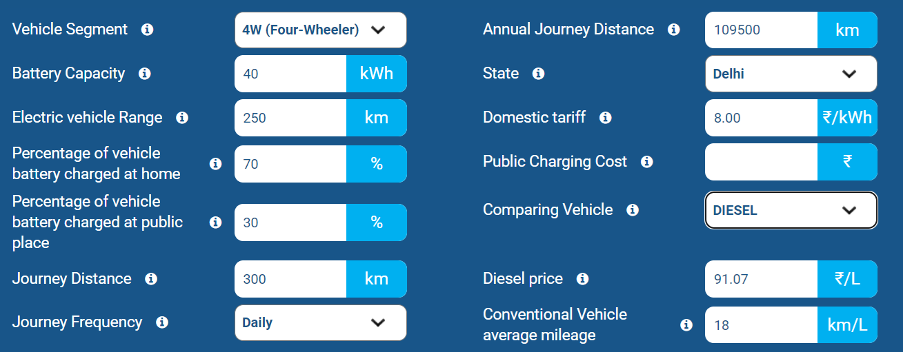
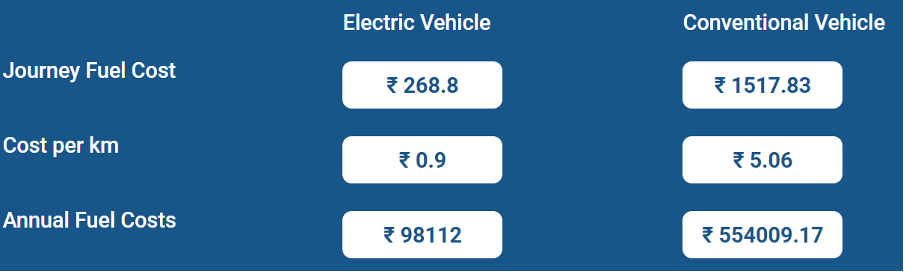
Source: https://e-amrit.niti.gov.in/journey-cost-calculator
With Alt Mobility’s FleetOS platform, businesses can benefit from real-time fleet monitoring, ensuring optimal energy consumption and minimizing operating costs. Our dedicated fleet support ensures that the vehicles stay on the road longer, maximizing uptime and reducing energy wastage. By managing charging and hubs effectively, Alt Mobility helps businesses further reduce energy costs, making EVs a more economical choice over time.
Subsidies
State and central governments in India offer incentives and subsidies to promote EV adoption. These subsidies reduce the effective cost of an EV, making it more affordable.
FAME, or Faster Adoption and Manufacturing of (Hybrid and) Electric vehicles, is currently India’s flagship scheme for promoting electric mobility. Currently in its 2nd phase of implementation, FAME-II is being implemented for a period of 3 years, eff. 1st April 2019 with a budget allocation of 10,000 Cr. The incentives offered in the scheme are:
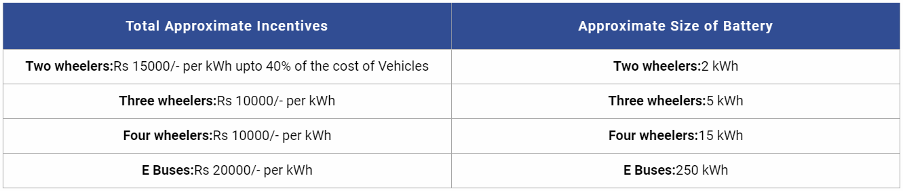
Source: https://e-amrit.niti.gov.in/electric-vehicle-incentives
Every state offers some incentives to you for adopting electric vehicles. To find out more about state-level policies, click here – State level policies.
At Alt Mobility, our team stays updated with the latest incentives to ensure that companies benefit from all available savings when acquiring and leasing EVs, effectively reducing the overall investment burden.
Road Tax Cost
In certain states like Delhi, EV buyers enjoy a 100% exemption from road tax. This is another incentive that significantly lowers the overall cost of ownership for EVs over the long term. In contrast, ICE vehicle owners in Delhi must pay an annual road tax, which, in our case, adds up to Rs. 6,100 over five years. These savings on road tax further enhance the economic benefits of choosing an EV.
Maintenance Cost
When it comes to maintenance, EVs generally require less attention than ICE vehicles due to fewer moving parts. Key components of an ICE vehicle, such as the engine, transmission, fuel pump, and exhaust system, tend to incur higher costs over time. EVs also benefit from technologies like regenerative braking, which reduces wear and tear on brake pads. However, battery replacement remains a significant cost for EV owners, typically occurring after several years. The good news is that battery replacement costs are steadily decreasing, making future replacements more affordable.
Insurance Cost
While costs can vary significantly based on various factors, on average, electric car insurance in India can be 20-30% more expensive than insurance for comparable petrol or diesel vehicles. The higher cost is primarily due to the advanced technology in EVs, such as batteries and electric motors, which are more expensive to repair or replace. The Insured Declared Value (IDV) of EVs is also higher, leading to increased premiums. However, this difference is often offset by the cumulative savings on fuel and maintenance, making the ICE vehicles vs EV comparison still favorable for EVs.
Alt Mobility’s all-inclusive lease eliminates this concern. With insurance costs covered under the lease, businesses don’t need to worry about fluctuating premiums or the higher costs of insuring EVs. This makes leasing through Alt Mobility a more cost-effective option for businesses looking to transition to electric vehicles.
Conclusion: EVs Offer Long-Term Savings for Indian Businesses
In conclusion, while the upfront cost of EVs may still be higher than their ICE counterparts, the long-term savings offered through lower fuel and maintenance costs make them a compelling choice for B2B fleets. As battery prices continue to drop and the government provides subsidies and incentives, EVs will offer even greater savings. For businesses and corporates in India looking to optimize their fleet management, switching to EVs is not only an environmentally responsible decision but also an economically advantageous one.
At Alt Mobility, With over 10,000+ vehicles leased and more than ₹200 Cr+ in Assets Under Management (AUM), we take pride in leading this pivotal transformation by offering reliable, cost-effective EV leasing and asset management solutions. Our leasing options provide a practical solution for B2B fleets and corporates, allowing them to accelerate EV adoption while effectively managing costs.
By opting for leasing, businesses can sidestep the hefty upfront costs of EV ownership while reaping the benefits of reduced operational expenses in the long run. Our all-inclusive services ensure that fleets remain profitable, compliant, and poised for the future. Join us at Alt Mobility in driving the change toward a sustainable and economically viable electric transportation landscape.
FAQs
- What is the total cost of ownership (TCO) of an electric vehicle compared to an ICE vehicle?
TCO includes acquisition costs, fuel, maintenance, insurance, and resale value, with EVs typically offering lower overall costs. - Are electric vehicles cheaper to maintain than ICE vehicles?
Yes, EVs have fewer moving parts, leading to lower maintenance and repair costs over time compared to ICE vehicles. - How do fuel costs compare between EVs and ICE vehicles in India?
Electricity costs for EVs are generally much lower than petrol or diesel prices for ICE vehicles, leading to significant savings. - What factors affect the resale value of electric vehicles versus ICE vehicles?
Market demand, government policies, and technological advancements impact the resale value of EVs, which is improving as adoption increases. - Are there any government incentives for businesses to switch to electric vehicles in India?
Yes, the Indian government offers various subsidies and incentives to promote the adoption of electric vehicles for businesses. - What is the role of charging infrastructure in the TCO of electric vehicles?
Investing in charging infrastructure can lead to lower operational costs for EVs, offsetting initial investments and ensuring business continuity.
Leave a Reply